
|
www.architetturaorganica.org - info@architetturaorganica.org - HOME |
ARCHITETTURA ORGANICA - Organic Architecture : index
storia, teoria, scritti, argomentazioni, attualità di Architettura Organica
history, theory, written, reasonings, news of Organic Architecture
ARCHITETTURA ORGANICA ITALIA - Organic Architecture Italy :
Architettura Organica come ambiente naturale, sociale e spirituale ottimale per l'uomo (Organic Architecture as natural, social spiritual and excellent environment for the man) , di Carmine Sarno e Carlo Sarno
SARNO ARCHITETTI
Architettura Organica - Organic Architecture

Da sinistra : Carlo Sarno e Carmine Sarno al lavoro ( at work )
Carmine Sarno e Carlo Sarno
Architettura Organica
come ambiente naturale , sociale e spirituale ottimale per l'uomo
Gli esseri umani non sono molto dotati fisicamente a paragone delle altre creature: la forza dei nostri muscoli non è eccezionale ed abbiamo un senso dell'odorato piuttosto insufficiente, una pelle delicata e mascelle e denti deboli; però mentre gli altri animali si adattano all'ambiente noi abbiamo bisogno di creare strumenti, tecnologia e cultura per favorire il nostro organico adattamento e ... come è stata utilizzata la prima pelle di animale come indumento e si è acceso il primo fuoco (e sono nati gli affetti familiari e le tradizioni intorno ad esso) è nato il primo spazio antropologico, il primo ambiente sociale, la prima architettura organica.
Obiettivo dello studio Sarno Architetti è la ricerca continua per la soluzione organica ( integrale armonia tra le parti ), ecosistemica ed ottimale dell'adattamento tra la città, l'architettura, il paesaggio e l'uomo nel rispetto della biodiversità, del sociale e dello sviluppo sostenibile.
La nostra ricerca che affonda le radici sia nel campo umanistico che nel campo scientifico è inevitabilmente legata al progresso, ad uno spazio vivente per l'uomo, e determina una condizione progettuale in cui il controllo temporale degli eventi passati, presenti e futuri si condensa nella creazione , mediante un processo generativo organico , di uno spazio-evento ecorganico (ecosistema naturale, sociale e spirituale armonico sintropico) qui ed ora che è obbligatoriamente un programma per il futuro sostenibile essendo esso stesso il nuovo, lo sconosciuto, il mai visto prima. L'Architettura Organica si sviluppa dall'interno all'esterno "ab intra ad extra".
Tale incessante ricerca permette, ogni qualvolta si deve affrontare un nuovo progetto organico con condizioni al contorno di ogni tipo, fisiche, psichiche, economiche, organizzative, tecniche, ecologiche, ecc., di determinare in modo latente, virtuale, la soluzione spaziale sistemica sinergetica in potenza già vivente nel campo generato da queste condizioni, e di aggettivarle con idee e invenzioni inevitabilmente nuove, in quanto i fattori in gioco sono diversi (biodiversità) e complessi, quanto lo è ogni uomo dal suo simile. In tal senso la rivoluzione informatica e la simulazione sistemica danno un valido aiuto allo sviluppo della nuova architettura organica.
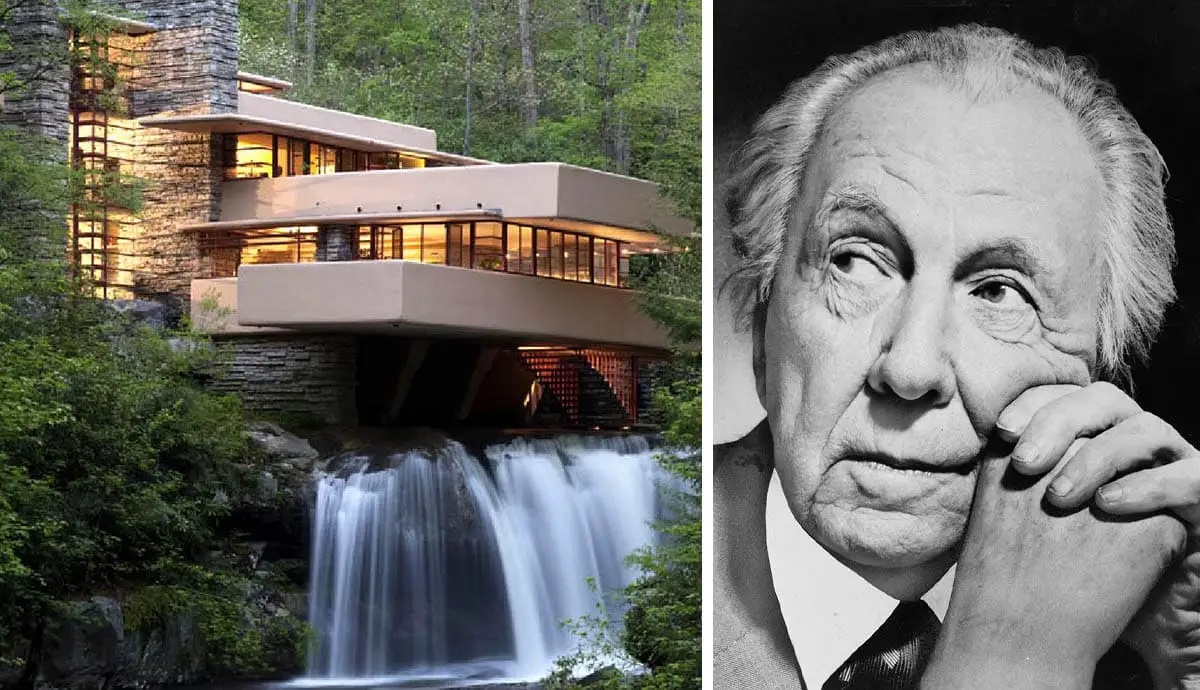
Frank Lloyd Wright (1867-1959, fondatore dell'architettura organica negli Stati Uniti - "forma e funzione sono uno") prima, poi Bruce Goff (1904-1982) e Paolo Soleri (1919), sono stati gli architetti che hanno posto i principi fondamentali dell’architettura organica , una architettura creativa e irripetibile per l'uomo , che non ha stile ma solo processi poetici generativi comuni. Precursori famosi , Louis Henry Sullivan (1856-1924) e Antoni Gaudì (1852-1926) .
In particolare l'italiano Paolo Soleri ha fondato negli Stati Uniti l'arcologia (architettura + ecologia) , cioè l'architettura organica in maniera ecosistemica. Importante per lo sviluppo dell'architettura organica Richard Neutra (1892-1970) , John Lautner (1911-1994 architettura organico-sperimentale) , Euine Fay Jones (1921-2004) , Gunnar Birkerts (1925 architettura come processo organico) .
Attualmente in America la nuova architettura organica ha come punto di riferimento Friends of Kebyar , una associazione internazionale senza fini di lucro di architetti e artisti organici che hanno conosciuto i maestri Wright e Goff o che hanno realizzato opere secondo i loro principi , tra questi : Douglas Cardinal , Arthur Dyson , Bart Prince , Robert Green , Joseph Henry Wythe , James Hubbell and Drew Hubbell , James Walter Schildroth , Kendrick-Bangs Kellogg , Robert Oshatz , Chayo Frank , Barry Peterson , Tom Arlin Dean , William Bruder , Ruth & Rick Meghiddo . In Canada John Kay . Molto importante è anche l'originale architettura organica di John MacLane Johansen (1916). Attualmente David Pearson (1940) è il più famoso critico internazionale della nuova architettura organica.
In Australia abbiamo attualmente in primo piano l’architettura organica ecologica di Glenn Murcutt , premio Pritzker di Architettura 2002, indicatore di una nuova tendenza generale.
In Europa abbiamo l'espressionismo organico di Hans Poelzig (1869-1936), Hugo Haring (1882-1958), Hans Scharoun (1893-1972), e l'antroposofia in architettura di Rudolf Steiner (1861-1925). In Finlandia Alvar Aalto (1898-1976) maestro dell'architettura organica europea e Reima Pietila (1923-1993). In Austria Friedensreich Hundertwasser (1928-2000) artista-architetto maestro della libertà del pensiero organico.
In Europa abbiamo l'architettura organica e sociale di Ralph Erskine (1914-2005) e Lucien Kroll (1927) . Importante è anche Imre Makovecz (1935) architettura organica ungherese . In Francia Roger Taillibert (1926) , Françoise e Philippe-Alain Riou .
In Italia l'architettura organica ha come esponenti storici: Giovanni Michelucci (1891-1991, maestro dell'architettura organica e sociale italiana), Pier Luigi Nervi (1891-1979, maestro dell'architettura organica strutturale) , Luigi Piccinato (1899-1983, maestro dell'urbanistica organica italiana), Bruno Zevi (1918-2000, critico e promotore di fama internazionale dell'architettura organica e sociale italiana), Carlo Scarpa (1906-1978), Giulio De Luca (1912-2004), Antonio Sarno (1921-2003), Marcello D'Olivo (1921-1991), Leonardo Ricci (1918-1994), Luigi Pellegrin (1925-2001) , Mario Galvagni (1928 , architettura organica come ecologia della forma ) , Aldo Loris Rossi (1933, esplosione centrifuga organica dello spazio architettonico) , Gaetano Pesce (1939 , alfiere del diritto alla diversità innovativa organica ) , Rolando Scarano (1941 , teorico dell'architettura scientifica come processo generativo organico).
Attualmente in Italia abbiamo fra gli altri: Sarno Architetti, fondato da due fratelli l' architetto organico Carmine Sarno (1958) e l' architetto organico Carlo Sarno (1959), promuove la Nuova Architettura Organica e Sociale Italiana ; Giovanni D'Ambrosio (1959, allievo di Pellegrin) , Alberto Rossi (1968).
La sensibilità a percepire organicamente, equilibrare e selezionare è una qualità che si acquisisce nel tempo con la pratica della disciplina architettonica la cui essenza è insegnare a guardare con la mente e con il cuore la vita ed evitare gli occhi che non vedono. L'architettura organica nasce da una idea sociale di libertà e non solo figurativa per la cultura della vita. Wright : "...ad ogni uomo il suo stile...".
L'architettura organica è l'arte della sostenibilità ecosistemica armonica e discorre continuamente con il mistero della creazione e la biodiversità. Ogni progetto organico diventa così un viaggio verso una terra incognita, dove si alleano il coraggio e la forza delle conoscenze degli esploratori che sono il progettista, il committente, il costruttore, e che insieme tentano di realizzare un futuro migliore per l'uomo.
Nell'Antico Testamento della Bibbia così si legge (Prov.24,3/4) :
" Con la sapienza si costruisce la casa,
con la prudenza si rende salda,
con la scienza (e l'arte) si riempiono le sue stanze di tutti i beni preziosi e desiderabili " ,
e dopo la Parola del Vangelo possiamo aggiungere:
" e con l'amore si vive, si abita, si progetta e si costruisce organicamente in maniera sostenibile".
La verità dell'architettura è lo spazio naturale e sociale ad immagine dell'ambiente spirituale, uno spazio organico sintropico dell'uomo inteso come carità universale nella biodiversità.
Vitruvio, nell'età dell'impero romano, nel suo trattato 'Dell'Architettura' sentenziò che qualsiasi opera architettonica ha tre requisiti fondamentali: la firmitas, la utilitas e la venustas, cioè rispettivamente la solidità, l'utilità e la bellezza; nel libro I°, cap.3 scrisse :" Solidità, quando le fondamenta costruite con materiali scelti con cura e senza avarizia, poggeranno profondamente e saldamente sul terreno sottostante; utilità, quando la distribuzione dello spazio interno di ciascun edificio di qualsiasi genere sarà corretta e pratica all'uso; bellezza, quando l'aspetto dell'opera sarà piacevole per l'armoniosa proporzione delle parti ottenuta con adeguato calcolo delle simmetrie ".
Con l'avvento della Parola del Vangelo possiamo aggiungere alle tre categorie classiche una quarta che le completa e le finalizza ad un progetto creativo organico di respiro universale :" la Caritas ".
Scrisse S.Paolo nella I° lettera ai Corinzi :" La carità è paziente, è benigna la carità, non è invidiosa la carità, non si vanta, non si gonfia, non manca di rispetto, non cerca il suo interesse, non si adira, non tiene conto del male ricevuto, non gode dell'ingiustizia, ma si compiace della verità. Tutto copre, tutto crede, tutto spera, tutto sopporta. ".
La carità rende partecipe l'architettura organica della vita spirituale, la libera , la proietta in una dimensione sovrastorica sintropica sebbene ancorata ai bisogni dell'ecosistema e della collettività: una vera architettura organica è lievito per la civiltà. L'amore è sintropia , fraternità , carattere , gioia e bellezza.
L'architettura organica nasce dalla sapienza del cuore dell'uomo.
La buona architettura , la vera architettura organica dell'uomo è espressione di buoni sentimenti, promuove l'amore come partecipazione sostenibile alla vita in tutte le sue forme ( paradigma ecologico sintropico ), diffonde la vera libertà, la biodiversità, è creativa , è bella, è raggiante di gioia , è ecologica, è sinergetica , è sociale , è congruente con il buon vivere ed il buon abitare. E' l'amore che agendo nella realtà, nel cuore degli abitanti, dei costruttori e dei progettisti, genera buona architettura e, quindi, un ecorganico ambiente naturale, sociale e spirituale per la vita dell'uomo.
I principi della Architettura Organica dello studio Sarno Architetti sono:
1) l'Architettura Organica è spazio per la vita libera , creativa , gioiosa e sociale dell'uomo e si sviluppa in continuità organica dall'interno all'esterno "ab intra ad extra" in armonia con le condizioni del proprio essere, con la natura e con Dio ;
2) lo spazio organico è flessibile e in movimento , in evoluzione sintropica , come la vita all'interno di esso ;
3) il processo generativo organico crea un locus unico , sociale e irripetibile ;
4) il dialogo creativo con l'ambiente naturale e antropico circostante genera uno spazio ecorganico e sinergetico ;
5) la composizione organica è sintropia e unità nella diversità conservando l'armonia tra le parti ;
6) l'integrità organica è armonia della verità come bellezza della molteplicità equilibrata nella biodiversità ;
7) la bellezza organica è rappresentazione armonica della finalità ;
8) il buon vivere , la fraternità e la felicità dell'abitare sono il fine dello spazio organico sistemico ;
9) l'Architettura Organica è sempre nuova perché è senza stile , unica e irripetibile , in quanto legata all’uomo , al luogo e al tempo ;
10) l'Architettura Organica nasce sempre dalla vita intesa come integrità , libertà , fraternità , gioia e amore .
Sarno
Architetti, Architettura Organica
![]()
Carmine Sarno e Carlo Sarno
ORGANIC ARCHITECTURE
AS NATURAL , SOCIAL SPIRITUAL AND EXCELLENT ENVIRONMENT FOR THE MAN.
The human beings don't are much endowed of strong physique in comparison with the other creature: the strength of our muscles is not exceptional and we have a sense of the smell rather insufficient, a delicate skin and weak jaws and teeth; but, while the other animals are suitable for the environment, we need to create instruments, technology and culture for favouring our organic adaptation and ......as has been utilized the first animal skin as garment and lighted the first fire ( and are born the domestic affection and the traditions round it ); was born the first anthropological space, the first social environment, the first organic architecture.
Objective of the Studio Sarno Architects is the constant research for the organic ( integral harmony among the parts ), ecosystemic and excellent solution of the adaptation between the city, the architecture the landscape and the man in respect of biodiversity, of social and sustainable development.
Our research that sinks the roots whether in humanistic field or in scientific field is strictly connected to the progress, to a living space for the man, and determines a designing condition in which the temporal control of past, present and future events condenses in the creation , through generative organic process , of an ecorganic space-event (harmonic syntropyc natural, social and spiritual ecosystem) , here and now, that is a programme for the sustainable future,being itself the new,the umknown,the never seen before. The Organic Architecture develops from within outward "ab intra ad extra".
Such unceasing research permits , every time you have to face a new organic design with conditions to the contour of each type: physical, psychological, economical, organizational, technical, ecological, to determinate in latent, virtual way, the synergetic systemic spatial solution potentially already living in the field generated from these conditions and to improve them with new ideas and inventions (biodiversity) and complexity, because every man is different from another. The informatic revolution (systemic simulation) helps the development of new organic architecture.
Frank Lloyd Wright (1867-1959, founder of organic architecture in U.S.A. - "shape and function are one") first, Bruce Goff (1904-1982) and Paolo Soleri (1919) after, have been the architects that placed the basic principles of organic architecture, a creative and unrepeatable architecture for the man, that has no style but only poetical common generational processes. Renowneds precursors , Louis Henry Sullivan (1856-1924) and Antoni Gaudì (1852-1926) .
Particularly the italian Paolo Soleri has founded the "arcology" (architecture + ecology), that is the organic architecture in ecosystemic way. Important for the development of organic architecture Richard Neutra (1892-1970) , John Lautner (1911-1994 experimental-organic architecture) , Euine Fay Jones (1921-2004) , Gunnar Birkerts (1925 architecture as organic process ) .
At present in the United States the new organic architecture has a reference point in Friends of Kebyar , a without profit international association of organic architects and artists that had known the masters, Wright and Goff, and their buildings follow the principles of the masters, among them: Douglas Cardinal , Arthur Dyson , Bart Prince , Robert Green , Joseph Henry Wythe , James Hubbell and Drew Hubbell , James Walter Schildroth , Kendrick-Bangs Kellogg , Robert Oshatz , Chayo Frank , Barry Peterson , Tom Arlin Dean , William Bruder , Ruth & Rick Meghiddo . In Canada John Kay . Very important is too the original organic architecture of John MacLane Johansen (1916). At present David Pearson (1940) is the top international critic of new organic architecture.
Now in Australia we have organic and ecological architecture of Glenn Murcutt, Pritzker Price of architecture 2002, indicator of a new general trend.
In Europe we have the expressionism organic of Hans Poelzig (1869-1936), Hugo Haring (1882-1958), Hans Scharoun (1893-1972), and the antroposophy in architecture of Rudolf Steiner (1861-1925). In Finland Alvar Aalto (1898-1976) master of european organic architecture and Reima Pietila (1923-1993). In Austria Friedensreich Hundertwasser (1928-2000) artist-architect master of free thought organic.
In Europe we have the organic and social architecture of Ralph Erskine (1914-2005) and Lucien Kroll (1927) . Also important is Imre Makovecz (1935) hungarian organic architecture . In France Roger Taillibert , Françoise and Philippe-Alain Riou .
In Italy the organic architecture has as historicals exponents: Giovanni Michelucci (1891-1991, master of italian organic and social architecture), Pier Luigi Nervi (1891-1979, master of structural organic architecture) , Luigi Piccinato (1899-1983, master of italian organic town-planning), Bruno Zevi (1918-2000, critic and promoter international's fame of italian organic and social architecture), Carlo Scarpa (1906-1978), Giulio De Luca (1912-2004), Antonio Sarno (1921-2003), Marcello D'Olivo (1921-1991), Leonardo Ricci (1918-1994), Luigi Pellegrin (1925-2001), Mario Galvagni (1928, organic architecture as GestaltEcology ) , Aldo Loris Rossi (1933, organic centrifugal explosion of architectonic space), Gaetano Pesce (1939 , flagman of the right to the innovative organic diversity ) , Rolando Scarano (1941, theorist of scientific architecture as organic generative process).
At present in Italy we have between the others: Sarno Architetti, founded by two brothers, the organic architect Carmine Sarno (1958) and the organic architect Carlo Sarno (1959) , promotes Italian New Organic and Social Architecture ; Giovanni D'Ambrosio (1959, disciple of Pellegrin) , Alberto Rossi (1968).
The sensibility to perceive organically, to balance and to select, it is a quality that one acquires in the time with the practise of the architectonic discipline whose essence is to teach to see with the mind and with the heart the life and to avoid the eyes that don't see. The organic architecture borns from a social idea of freedom and not figurative for life's culture. Wright : "...to every man his style... ".
The organic architecture is the art of the ecosystemic and harmonic sustainability and talks continually with the mystery of the creation and biodiversity. Every organic project becomes this way a journey towards an unknown earth, alliance between the courage and the force of the knowledges of explorers who are the planner, the buyer , the builder who together try to realize a better future for the man.
In the Old Testament of the Bible you can read (Prov.24,3-4):
"With the wisdom you build the house, with the prudence is made solid, with the science ( and the art) her rooms are filled of all precious and desirable goods".
And after the word of the Gospel we can add:" and with the love you live, you inhabit, you plan and build organically in sustainable way".
The true architecture is natural and social space as image of the spiritual environment, a syntropyc organic space like a universal love in biodiversity.
Vitruvio, in the age of Roman Empire, in his treatise "About Architecture" said that any architectural work has three fundamental qualifications: the firmitas ,the utilitas and the venustas, that is respectively the solidity, the utility and the beauty; in the first book, chapter 3 he said: " Solidity, when the foundations builded with materials selected with care and without avarice, will rest deeply and firmly on the underlying ground; Utility, when the distribution of the space inside of every building shall be correct and pratical to use; Beauty, when the look of the work will be pleasant for the harmonius proportion of the parts obtained with adequate calculation of the symmetries".
With the advent of the Word of the Gospel we can add a fourth category that completes and improves the preceding ones towards an organic , creative plan of universal breath." The Love".
S. Paul in the first letter to Corinthians said: "The love is patient, is kind , is not envious, is not proud, is not lacking in respect ,not looks for his interest , is not angry, not considers the received evil , not enjoy of injustice, but is delighted in the truth. All covers, all believes, all hopes, all bears".
The love informs the organic architecture of the spiritual life, sets it free, projects into a syntropic above-historical dimension though anchored to ecosystem's and humanity's needs : a true organic architecture is ferment for the civilization . The love is syntropy , fraternity , character , joy and beauty .
The organic architecture is born from the wisdom of the heart of the man .
The good architecture, the true man's organic architecture is expression of good sentiments, it promotes the love like sustainable participation to the life in all her forms ( ecological syntropyc paradigm ), diffuses the true freedom, the biodiversity, is creative , is fine, is beaming with joy , is ecological, is synergetic , is social, is congruent with the well staying and the well living .
It's the love that, acting in the reality , in the heart of the inhabitants, of the builders and of the designers, produces good architecture and, therefore, one ecorganic natural , social and spiritual environment for the life of the man.
The principles of the Organic Architecture of Sarno Architects :
1) the Organic Architecture is space for the free , creative , joyous and social life of the man and is developed in organic continuity from the inside to the outside "ab intra ad extra" in harmony with the conditions of its being, with the nature and with God ;
2) the organic space is flexible and in motion , in syntropyc evolution , as the life to the inside of it ;
3) the organic generative process creates a unique , social and unrepeatable locus ;
4) the creative dialogue with the natural and anthropic surrounding environment generates a ecorganic and synergetic space ;
5) the organic composition is syntropy and unity in the diversity , conserving the harmony among the parts ;
6) organic integrity is harmony of the truth like beauty of the well-balanced variety in the biodiversity ;
7) the organic beauty is harmonic representation of the finality ;
8) the good living , the fraternity and the happiness of living are the aim of the systemic organic space ;
9) the Organic Architecture is always new because it is without style, unique and unrepeatable , being tied to the man, to the site and to the time ;
10) the Organic Architecture is born always from the life understanding like integrity , freedom , fraternity , joy and love .
Sarno
Architects, Organic Architecture
Fonte :
Dal (since) 1981
SARNO ARCHITETTI
ARCHITETTURA ORGANICA
ORGANIC ARCHITECTURE - ARCHITECTURE ORGANIQUE
ORGANISCHE ARCHITEKTUR - ARQUITECTURA ORGANICA
Architettura Organica
Organic Architecture - Architecture Organique - Organische Architektur - Arquitectura Organica